
Surgery
Veterinary surgery records: consent, anaesthesia log and statuses
VetBis plans the surgery, takes the consent form, keeps an anaesthesia log and moves the record through PreOp, In progress, PostOp and Completed. Recovery continues in hospitalization, consents work with forms and printing, and the record links to the exam.
- 09:15
PreOp
Consent and anaesthesia ready
- 09:30
In progress
Anaesthesia log open
- 11:00
PostOp
Note and monitoring
Anaesthesia vital log (sample record)
| Pulse | 09:30 112 | 09:45 104 | 10:00 96 | 10:15 92 | 10:30 95 | 10:45 100 | 11:00 106 |
|---|---|---|---|---|---|---|---|
| Respiration | 09:30 24 | 09:45 20 | 10:00 16 | 10:15 14 | 10:30 15 | 10:45 18 | 11:00 22 |
This is a log, not a live monitor, and the values are examples.
Live flowPostOp 3 / 3
Steps
- 1PreOpConsent taken, anaesthesia planned.
- 2In progressVital values are written to the anaesthesia log.
- 3PostOpPost-op note and monitoring.
From plan to invoice: six steps of one surgery
The flow below is the life of one surgery record. The anaesthesia part is a log, not a live monitor; the values are examples.
Surgery cost
| Surgery | TRY 3,500.00 |
|---|---|
| Anaesthesia | TRY 800.00 |
| Supplies | TRY 450.00 |
| Total | TRY 4,750.00 |
Live flowCost and invoice 6 / 6
Steps
- 1PlanSurgery type, date, anaesthesia type and vets are chosen.
- 2ConsentThe surgery consent form is taken; its status and validity stay on the record.
- 3Anaesthesia logProtocol, duration and vital values are written to the log.
- 4StatusesThe record moves through five statuses; cancelled and complicated are side statuses.
- 5Complication noteIf something went wrong, the status becomes Complicated and a note is written.
- 6Cost and invoiceThe surgery cost is passed to the invoice.
Preparation and the consent form
Consent is tied to the surgery record. The consent form is not only for surgery; it works across seven consent types in VetBis.


- Surgery
- Treatment
- Anaesthesia
- Euthanasia
- Data protection (KVKK)
- Boarding
- Grooming
- The consent form's status and validity period show on the record.
- The same form is used for other procedures such as boarding, grooming and euthanasia.
- The surgery record is linked to its consent form.
Anaesthesia record: protocol, duration and vital log
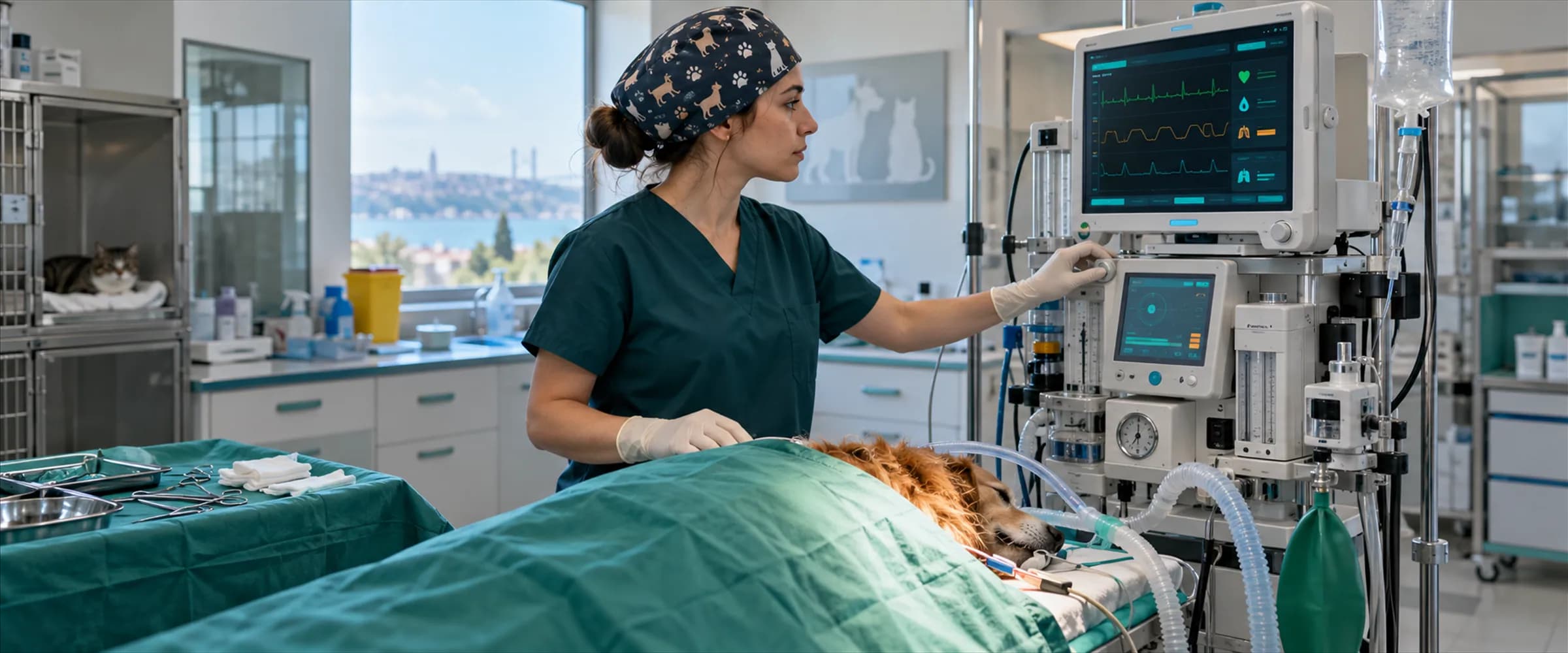
The anaesthesia record is kept apart from the surgery record and is tied to the anaesthetist. It is a log; it does not replace a live monitor.
- Anaesthetist
- Chosen separately from the surgeon.
- Protocol
- The anaesthesia protocol used is written.
- Start, end and duration
- Duration is recorded in minutes.
- Vital log
- Values during anaesthesia are written to the log.
- Complication
- A problem during anaesthesia is noted on the record.
- Anaesthesia type and details
- The surgery record carries the type and details.
AI assistant for surgery (beta)
On the surgery screen the AI assistant can offer a suggestion. It is in beta, off unless the provider is configured, and the decision always stays with the vet.

Frequently asked questions about veterinary surgery records
Scheduled, PreOp, In progress, PostOp and Completed; Cancelled and Complicated are side statuses.
Surgery, treatment, anaesthesia, euthanasia, data protection (KVKK), boarding and grooming. There is no blood transfusion or general consent type.
No. Anaesthesia vital values are written as a log; it does not replace a live monitor.
The record picks a surgeon and an anaesthetist. There is no assistant or team field.
Yes. The surgery cost is passed to the invoice.