
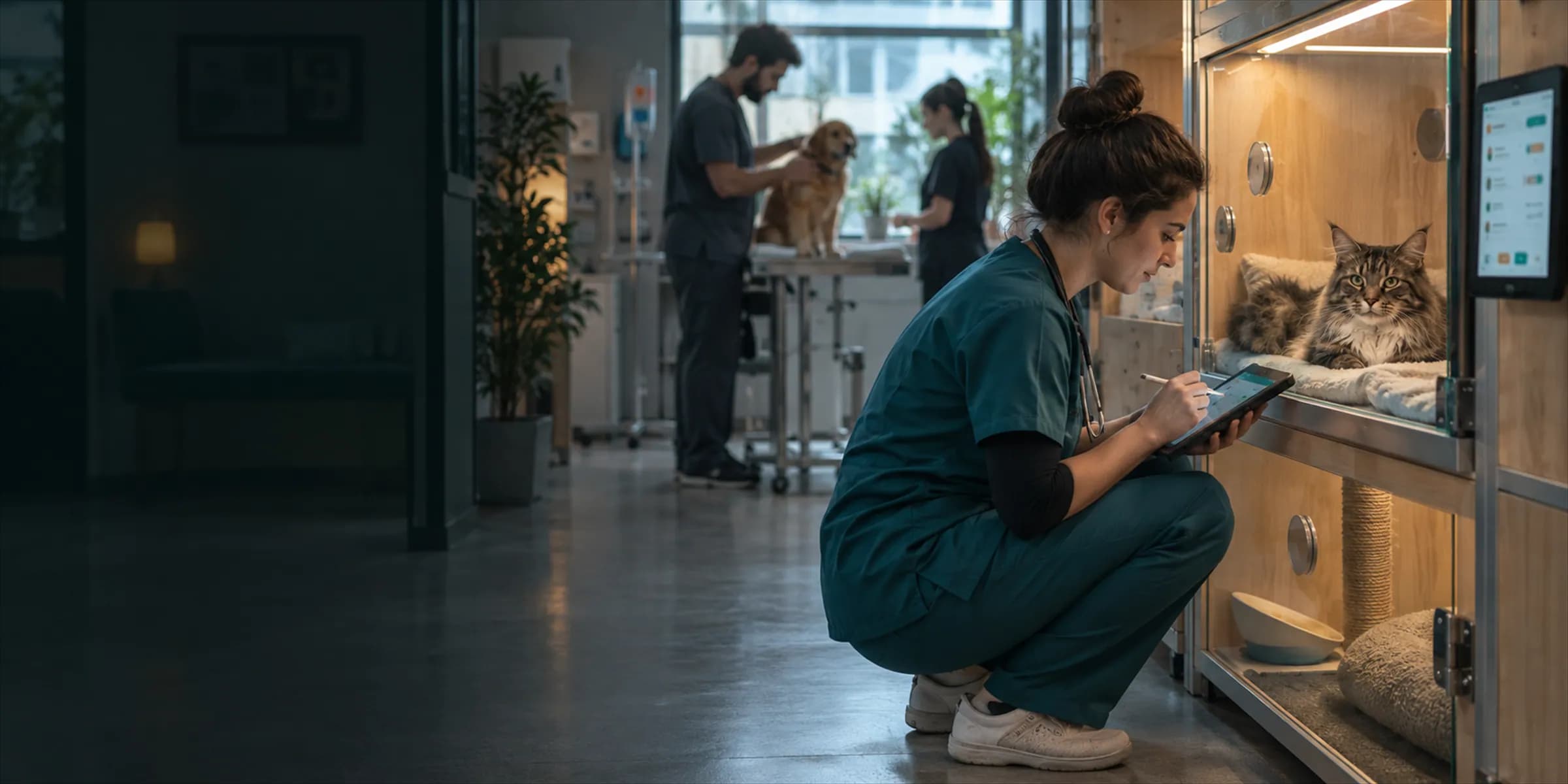
Adding a pet hotel to a vet clinic is a natural step: a team that knows vaccines, chronic medication and emergencies is a place owners trust with their animals. But boarding needs a different workflow from the clinic: date-based reservations, occupancy, daily care notes and a single invoice at check-out. VetBis boarding keeps that workflow beside your clinical records. This guide shows how to organise pet hotel reservations and the daily care log, whatever tool you use.
How a pet hotel differs from the clinic
| Topic | Clinic | Pet hotel |
|---|---|---|
| Time unit | Appointment (minutes) | Stay (nights) |
| Record frequency | Per visit | Several times a day |
| Revenue lines | Consultation, procedures, products | Stay plus extras |
| Critical risk | Wrong treatment record | Missed feed or medication, wrong release |
Knowing this tells you which fields to keep separate when two businesses share one system.
1. Reservations: what to ask and collect
Missing information at booking means a queue at check-in. Turn this list into a standard for phone calls or forms.
Reservation checklist
- Owner contact details and a second contact reachable in an emergency
- Species, breed, age, weight, sex and neutering status
- Check-in and check-out dates, expected times
- Room or stay type preference
- Feeding plan: food brand, number of meals, portions
- Chronic conditions and regular medication, with dose and time
- Allergies and behaviour notes (nervous, aggressive, not good with other animals)
- Vaccine and parasite status (look it up in the system if the animal is a clinic patient)
- Extra service requests: grooming, a longer walk and so on
If the owner is already a clinic client, most of this is already in the patient record. That is the biggest advantage of a hotel attached to a clinic: nobody fills in a form from scratch every time.
Admission rules
Turn your vaccine and parasite requirements into a written rule, agreed with your own vets. Decide in advance which sick or possibly contagious animals you will not accept and whether they are referred to isolation. State the rule at booking so nothing comes as a surprise on arrival day.
2. Tracking occupancy
You need the date range and room occupancy in a single view. An occupancy board should answer at a glance:
- How many rooms are full tonight, how many are free?
- Which days next weekend hit capacity?
- Who arrives and who leaves today?
A simple rule: do not overbook, and keep a waiting list for public holidays and school breaks. Peak periods are when demand concentrates, and planning capacity ahead protects your reputation more than it protects revenue.
Do not mix the clinic's hospitalized patients with hotel guests. Hospitalization is a medical process; boarding is a care service. Use physically separate areas and separate room types in the record. An animal that needs isolation should never be placed in the hotel area.
3. Check-in steps
- Verify identity and reservation.
- Give the animal a quick general check: visible wounds, fleas or ticks, coughing, signs of diarrhoea.
- List the belongings brought in (bed, toys, food), with a photo if possible.
- Record medication and feeding instructions in writing.
- Take the owner's written consent: authority to act in an emergency and who to contact.
- Assign a room.
These six steps head off most "where is the toy we brought?" or "did that wound happen here?" conversations at check-out.
4. The daily care log
The daily care log is the hotel's proof of quality. It serves both team hand-over and the information you give owners. Set a standard daily template:
| Field | Example note |
|---|---|
| Feeding | Meals and how much was eaten: finished / left half |
| Water | Normal / low |
| Stool and urine | Normal / soft / none |
| Medication | Given or not, time, by whom |
| Activity and behaviour | Play, walk, restlessness, fear |
| General condition | Normal / needs attention |
| Notes | Observations to pass to the vet |
A "needs attention" rule
Set a clear threshold for signs such as skipping two meals in a row, vomiting, diarrhoea or lethargy: the lead vet is informed and, if needed, the animal moves to a clinical examination. A hotel attached to a clinic has a real strength here, because the hand-off happens inside the same record.
Who writes the log?
The name and time of the person who wrote each entry should stay on record. At shift changes (morning and evening), make sure the previous shift's notes have been read. For rota planning, see staff management.
Room 1
Dog · 1
Dog guest
3 nights
Room 2
Cat · 2
Cat guest
3 nights
Room 3
Standard · 3
- Check-in
Check-in completed
Belongings and medication instructions written down.
- Day 1
Daily care note
Food: all eaten, water: normal, medication given.
- Day 2
Note with a photo
Activity and general condition recorded.
Photo added to the log - Check-out
Check-out invoice
Stay and extra services on one invoice.
Live flowCheck-out 5 / 5
Steps
- 1First guest takes a roomThe reservation is verified and a room assigned.
- 2Second guest arrivesOccupancy updates by room type.
- 3Daily care logFood, water and medication notes are written each day.
- 4A photo is addedThe photo joins the care log; automatic sending to the owner is not open yet.
- 5Check-outEntries are closed and the check-out invoice is prepared.
Sample guests and notes; not real records.
5. Extras and the check-out invoice
Pet hotel revenue is more than the stay: grooming, extra walks, special food, medication administration and similar items add up. The problem is when these are not written down during the stay and someone tries to remember them at check-out. The rule: an extra service goes on the record the moment it is given.
Check-out invoice checklist:
- Is the number of nights correct?
- Are all extras included?
- Are any medication or clinical products used during the stay on separate lines?
- Has any deposit or advance payment been deducted?
- Has the payment type been selected and posted to the cash desk?
Give the owner a short summary at check-out: how long the stay was, how the animal ate and behaved, and whether anything was passed on to the vet. That summary comes from the daily log; if the log is tidy, it costs no extra work. For the payment side, see cash desk and collections.
6. A daily workflow for the pet hotel
| Time of day | Work |
|---|---|
| Morning | Read overnight notes, meals and medication, cleaning, departures |
| Midday | Walks and play, meals, arrivals |
| Evening | Meals, medication, general condition log, occupancy check |
| Night (if staffed) | Night check, emergency criteria |
Adapt this to your own team. What matters is that the same checklist runs on every shift.
Common pet hotel mistakes
- Writing the care log from memory at the end of the day
- Giving medication without recording the time
- Leaving extras until check-out
- Keeping a sick animal in the hotel area
- Tracking occupancy in your head instead of on a calendar
FAQ
Do I need a separate system for the pet hotel? No. Keeping it with your clinic records means the patient file, vaccine status and invoice sit together.
Can daily updates be sent to owners? This guide does not assume automatic notifications. How you update owners (phone, message) is part of your own process; with a tidy log you can produce a summary quickly.
Is there a solution for clinics that run a pet hotel? Yes, the clinics with a pet hotel solution brings clinic and hotel work into one record.
Next step
Standardise your reservation form and daily care template first. Then try VetBis free for 7 days and see reservations, daily logs and the check-out invoice in one place.